
Your Duke Energy bill
And our fight to lower it

Duke Energy has announced they want to raise rates again.
This time by about 15 percent.
As the Attorney General for North Carolina, I’m your voice to push back, and I just did:
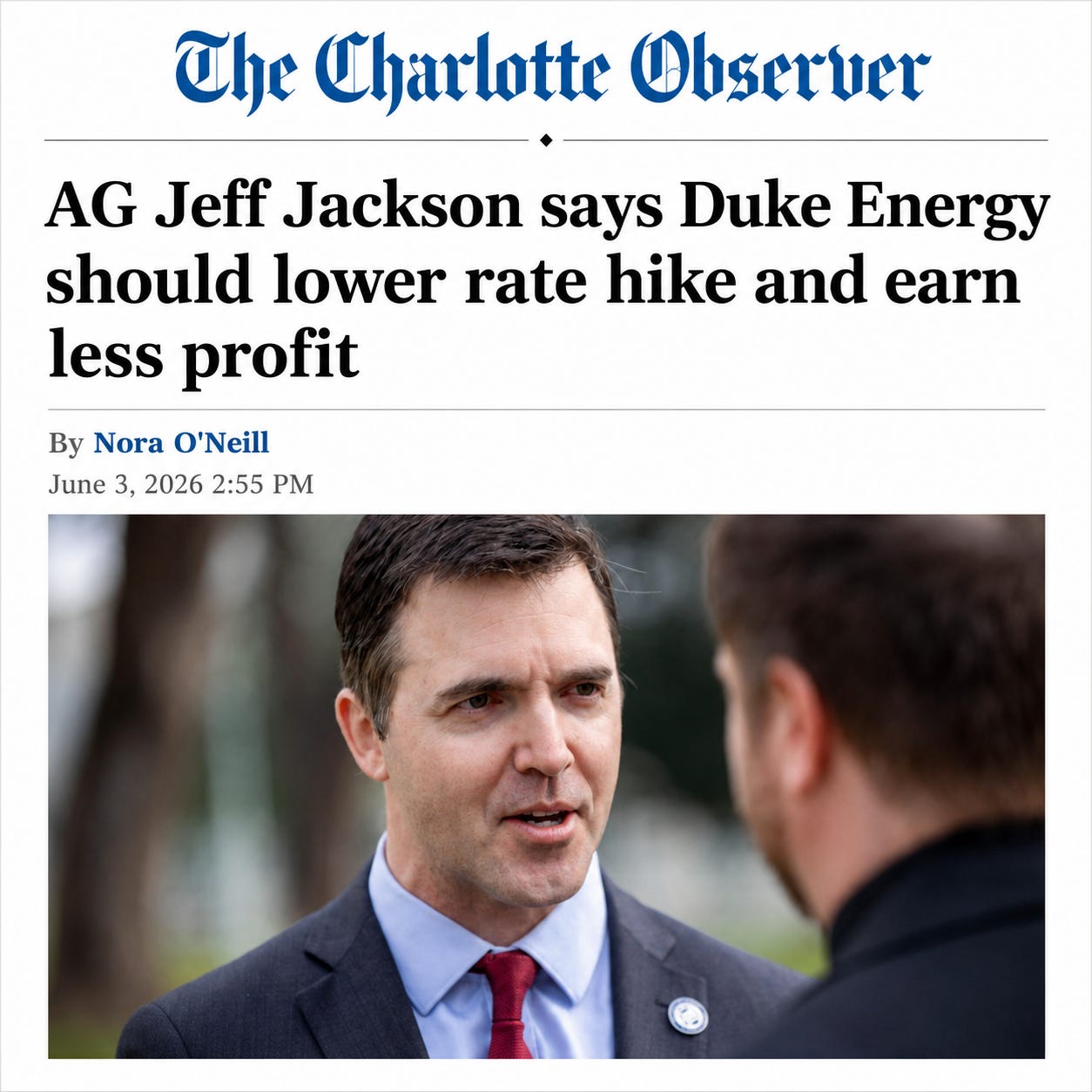
Under state law, Duke is allowed to be a monopoly, but it’s not allowed to set its own rates. That’s done by the Utilities Commission, so that’s where I’m making our case.
We’ve been building this case for months, it’s about 700 pages and you can read it online, but here are the two biggest parts.
First, let’s talk money.
For the average family, Duke’s request would mean going from paying about $140 a month to about $170 over the next couple years.
A major piece of this is the profit rate. By law, Duke is allowed to earn a profit, but only as much as it needs to meet the growth in the demand for energy.
Right now, Duke can have a 10.1% profit, which brings in about $2 billion each year in net income and makes it one of the most profitable utilities in the country.
Now it’s asking to raise its profit to 10.95%.
What our case does is drill all the way down on what Duke really needs to meet demand growth - and we think they overshot the mark.
So we’re asking for a reduction in their profit margin to 7.4%, which would save the average family a couple hundred bucks a year.
The second big part of our case is data centers.
We’re asking the Utilities Commission to create a separate rate class for them and other very large energy users.
Why?
Because they’re different.
They use massive amounts of energy, they strain the whole system, and going into this new era we need specific protections to make sure families don’t see rates spike because of gigantic new users on the grid.
The Utilities Commission gets to make the ultimate decision, but we’ve got a strong case to bring rates down and I’ll keep you posted.
Our new case against the Department of Education
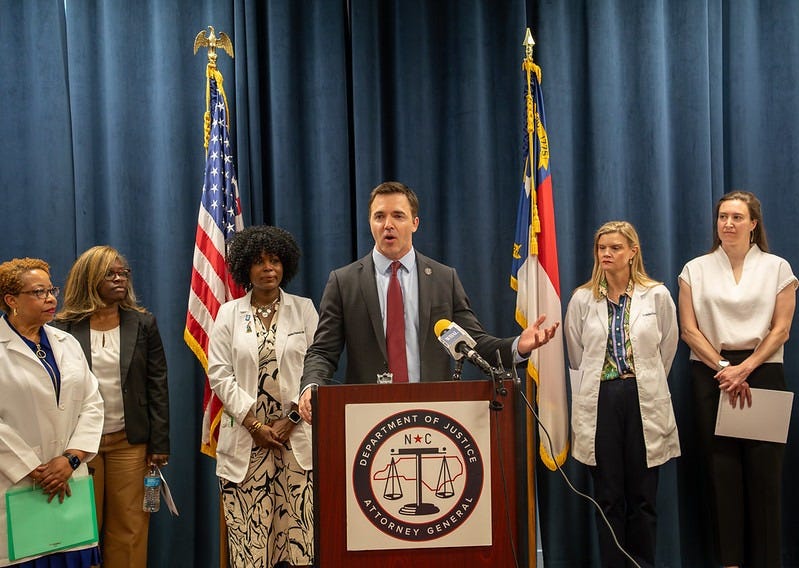
We just sued the Department of Education on behalf of thousands of student nurses, physician assistants, physical therapists, and other health care workers across North Carolina.
Here’s why:
Last year - in the One Big Beautiful Bill Act - Congress created new limits on financial aid for students.
Whether you agree with that policy or not, Congress is allowed to do that.
It set a higher financial limit for “professional” degrees, because those tend to cost more.
Congress can do that, too.
Then it listed examples of the degrees that count as “professional,” to be clear about what was covered.
And it can do that, too.
But then it went to the Department of Education to enforce the new limits, and the department decided to make up its own rules that limited the definition of “professional.”
According to the department, that excludes nurses, physician assistants, physical therapists, and lots of other health care workers, which means they won’t be treated as “professionals” for their student loans.
And that, it can’t do.
Once Congress says, “Here’s who’s eligible, and it includes nurses, physician assistants, etc.,” the Department of Education doesn’t get to say, “Nah, we’ll do our own thing, and it doesn’t include those folks.”
That’s against the law. Departments only have the power Congress gives them. They don’t get to turn around and contradict it. Redefining “professional” is the department taking power away from Congress, and the effect would really hurt our state.
In NC, 93 of 100 counties have a primary care shortage. That’s why nurse anesthetists are the ones primarily giving anesthesia in 80 percent of rural communities.
These are the exact people this new definition would push out.
As Attorney General, I have a lot of legally complex cases. This isn’t one of them. Congress was clear, and I think we’re going to do well in court.
And to all the nurses and PAs and PTs out there - thank you for what you do. I’m sorry these guys decided to go after you like this, but we have your back, and they’re about to see us in court.
Best,
AG Jeff Jackson
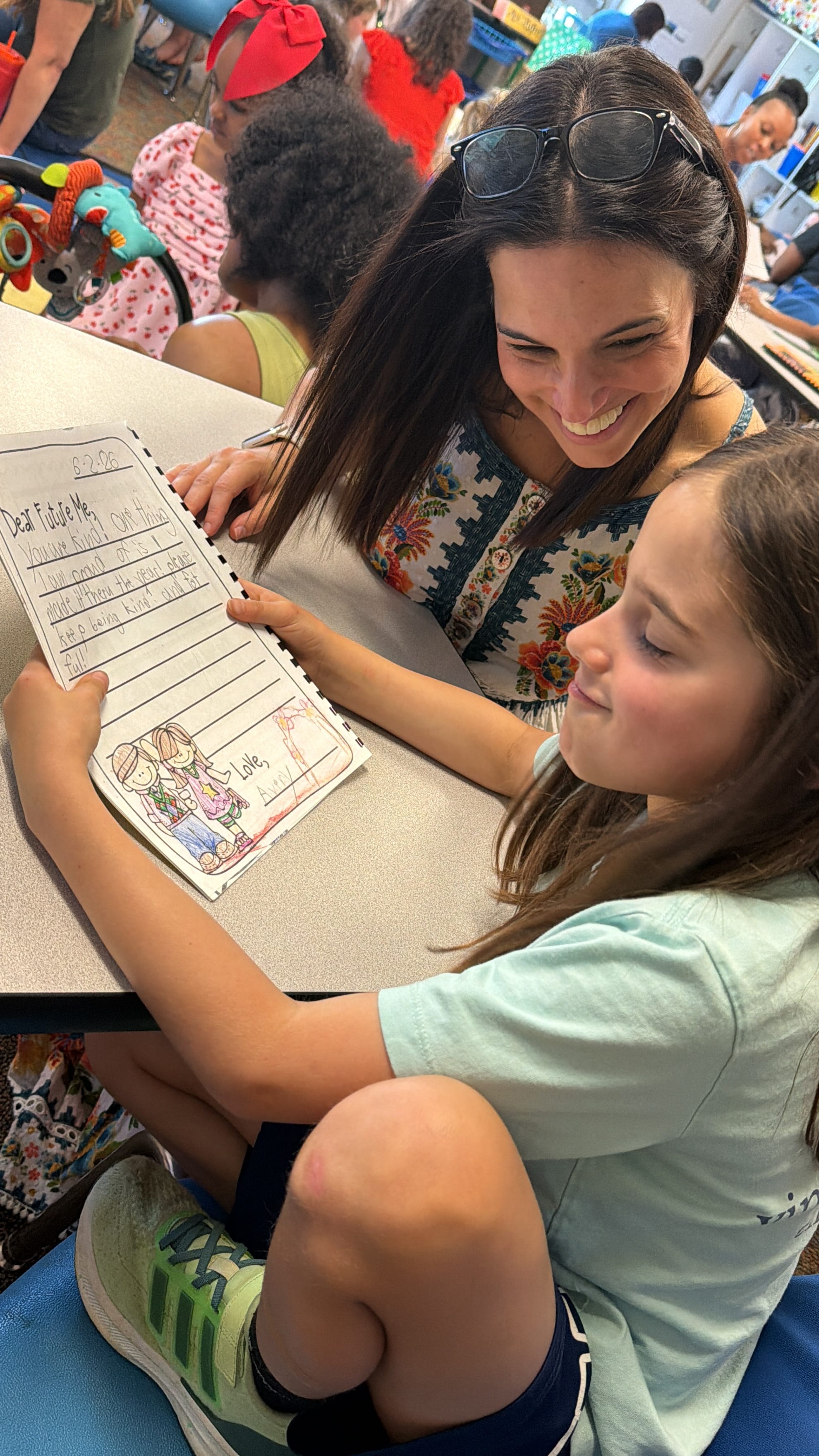
P.S. - Marisa and I were proud to join Avery for her end-of-first-grade celebration last week. She read us what she wrote to her future self. Zoom in and you can read it, too. She had a great year, and we really appreciate her teachers for being so welcoming and kind.
Thank you so much. Can we please limit the number of data centers in NC? They have been shown to also cause extensive changes to the environment and to the communities surrounding the data centers. NC needs to protect its citizens and the environment. We have lovely rolling hills and flat lands. We don’t need this lovely land populated with data centers.
Thanks, Jeff, for fighting against Duke Power. As for Data Centers, I don’t want ANY built. They are energy and water hogs and an environmental nightmare.